
Is online dating harder for autistic people, or just different? My experience on Bumble
Last week, I got back on Bumble. It wasn’t my first time. I’d joined the online dating app in 2025, but not really to find a relationship. I wanted to understand how dating apps worked for autistic people, and I thought there might be a story in it for Techpoint Africa. Then I matched with someone, and the research project quietly became something personal. I deleted my profile and focused on getting to know him instead.
You could call that losing focus. It didn’t last, though. He was a genuinely good person, but as the therapist Esther Perel often points out in her work on relationships, someone can be good and still not be the right fit when the timing or circumstances aren’t right.
So on Friday, June 12, I went back. This time, on purpose, for this article, since my first attempt at “research” hadn’t exactly stayed research. While setting up my profile, I made the same decision I’d made the year before: I put it in my bio that I’m autistic.
I should also mention I’m Christian, and I included that too. Two different friends — one last year, one this year — told me dating apps are mainly for hookups. I understand why they think that. Online dating does come with assumptions about casual connections and low commitment, and for some people, that’s exactly what it is. Still, I wanted to try it properly. I adjusted my filters and preferences to find people who matched what I was actually looking for, and to reduce the chances of connecting with people who weren’t serious.
I assumed the hardest part would be finding someone who shared my interests. I was wrong. The hardest part was deciding who to swipe right on, out of what felt like an endless pool of people.
Within a week, I’d seen over 400 profiles and matched with around 50. Out of those, I actively messaged about seven. Of those seven, only four conversations lasted beyond the first exchange, and even those fizzled out within a day.
For someone who prefers focusing on one person at a time, juggling multiple conversations was exhausting. I struggled with keeping up, deciding how much interest to show, and figuring out how to navigate it all without feeling completely overwhelmed.
That experience taught me something important: dating apps promise connection, but most are built around quick judgements and subtle social signals that aren’t always easy for autistic people to read. The challenge isn’t finding someone. It’s navigating a system built on unspoken rules, such as when to reply, how to read tone, and how much of yourself to reveal, without ever being told what those rules actually are.
Why autistic people use dating apps
One of the things I genuinely liked about going back to Bumble was the control it gave me. Meeting someone offline means juggling a lot at once — starting a conversation, reading body language, working out whether someone’s interested, figuring out what to say next. For a lot of autistic people, that kind of spontaneous interaction is exhausting precisely because it asks you to process several social cues simultaneously, in real time, with no pause button.
A dating app removes some of that pressure. I could read someone’s profile, take in their interests and values, and decide how I wanted to respond, all before any pressure to perform in the moment. That ability to pause and process is genuinely useful.
It also let me be intentional. I’d included that I’m Christian and autistic in my bio because those are important parts of who I am, and I adjusted my preferences accordingly. For instance, I didn’t accept matches from Muslim men, because I was hoping to date someone who shared my faith. If I matched with someone outside that anyway, I found it hard to start a conversation. Not because anything was wrong with them, but because I already knew I wasn’t likely to pursue it, and I didn’t want to create an expectation I couldn’t meet. It felt better, to me, to be clear from the start.
That said, the same filtering that helped me also limited me. A profile only shows a sliver of who someone is. Sometimes the person who looks incompatible on paper turns out to be the one you click with, and the person who looks perfect doesn’t share your communication style at all.
What also drew me in was how easily profiles reveal shared interests. That is, things that might take several real conversations to uncover offline. For someone who finds small talk difficult, having a concrete starting point makes everything easier. I engaged far more naturally with people who opened with something specific than with a generic “hey, how are you?”
One match told me we had a lot in common, particularly an interest in how people think. I was genuinely excited, so I wrote a long, thoughtful message. The reply that came back didn’t carry the same energy, and the conversation just stopped.
This is one of the more confusing parts of dating apps for me. Was the person no longer interested? Did they just not enjoy long messages? Was the short reply simply their communication style? I don’t always know, and that’s the strange contradiction of these apps: they make the first step easier by giving you structure, but they don’t remove the uncertainty of actually understanding another person.
The unwritten social rules nobody explains
The biggest challenge wasn’t the app itself. It was the invisible rulebook underneath it.
On the surface, dating apps look simple: create a profile, match, chat, see where it goes. Underneath, there’s a whole set of unspoken expectations nobody ever spells out.
How long should you wait before replying? This genuinely puzzled me. If someone messages me and I want to reply, why would I deliberately delay just to seem less eager? But apparently, in dating culture, replying too fast can read as overeager, and waiting too long can read as disinterest, and the same behaviour seems to mean different things depending on who you ask.
Then there’s the question of how much communication counts as “too much.” When I’m genuinely interested in someone, I want to know more, including their thoughts, their experiences, and what makes them who they are. But I’ve had to second-guess that curiosity constantly. Am I asking too many questions? Showing too much interest too soon? Being too direct?
One morning I matched with someone using Bumble’s travel mode, clearly not in Nigeria, and I wasn’t even sure how fluent they were in English. Naturally curious, I started asking about their background. Partway through, I had to stop and wonder: am I being too direct here? And that was the end of that conversation.
The questions felt completely normal to me. I was just trying to understand who I was talking to. But dating comes loaded with assumptions about how quickly people should reveal themselves, and those assumptions are rarely stated outright.
There’s also the line between friendliness and flirting, which I still find genuinely hard to read. “We should hang out sometime” could mean real interest, polite small talk, or nothing much at all. A compliment could be attraction, or it could just be kindness. Constantly decoding these small signals is mentally tiring, and I found myself repeatedly asking: are they interested, or just being polite? Did I misread that? Am I showing the right amount of interest?
For autistic people, this becomes even harder because so much of dating relies on cues that are assumed rather than communicated. That, I think, is one of the biggest contradictions of online dating. It makes meeting people easier, without making understanding people any easier at all.
The pressure to build a “perfect” profile
Before anyone talks to you on a dating app, they meet the version of you on your profile. That sounds simple. It isn’t.
Apps tell you to “be yourself,” while also asking you to package that self into something a stranger can understand in seconds. You need to look interesting without trying too hard, confident without being arrogant, approachable without seeming too available.
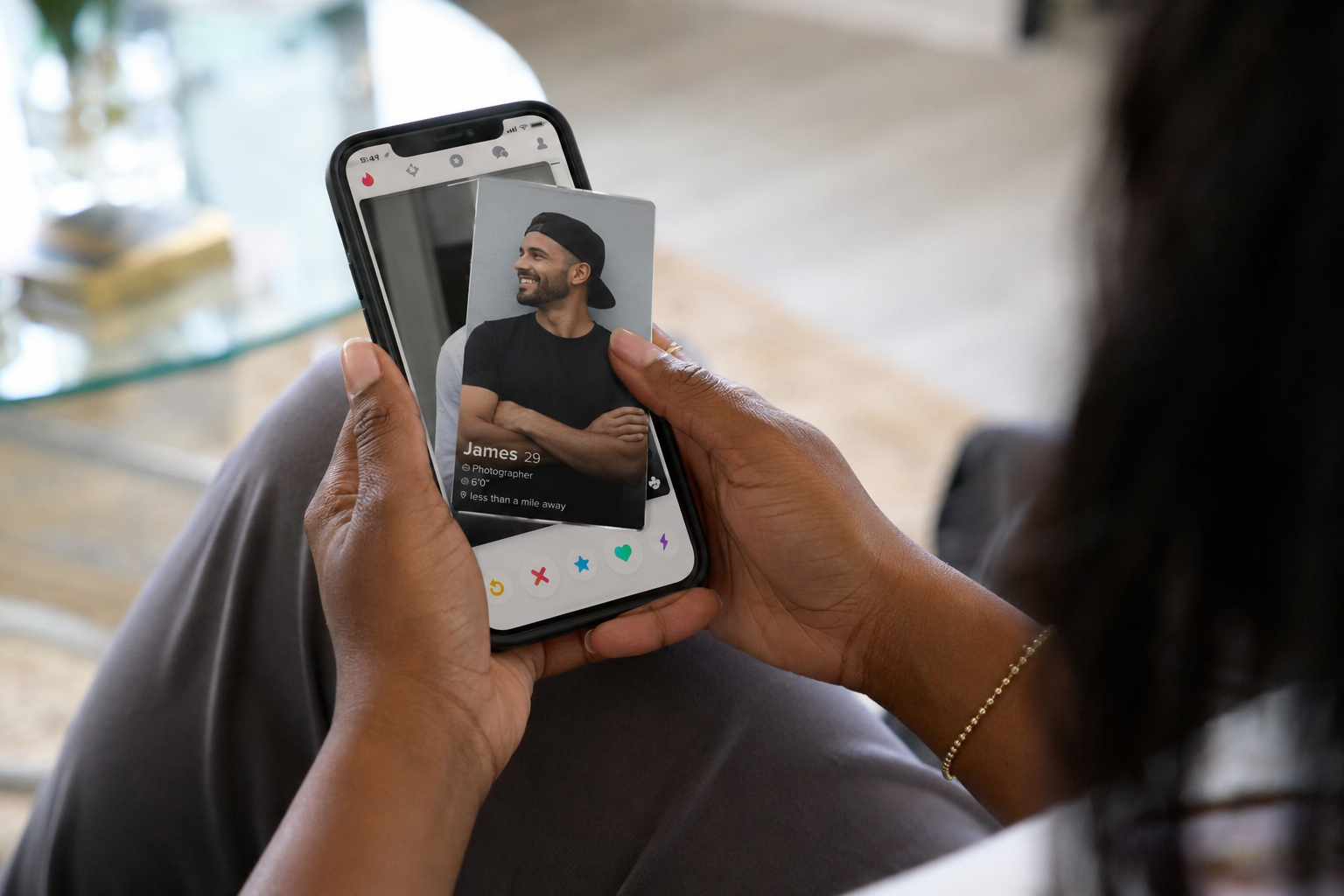
Building my profile felt like translating myself into a format strangers could read in a glance. Bumble allows six photos; I picked four, and even that took far more thought than I expected. Was this photo too serious? Did this one show enough personality? Was I choosing pictures that represented me, or pictures I thought other people would like?
The bio took even longer. I wanted it to be accurate — Christian, autistic, but not only those things — and figuring out how much to reveal, and how, took real effort.
This is where things get complicated. Dating apps reward authenticity, but only the kind that fits a familiar, easily digestible format. You’re meant to be yourself, just within a shape other people find easy to recognise. For some autistic people, that creates real pressure to mask, to quietly adjust or hide parts of yourself to seem more socially legible.
I felt that pressure constantly. Every time I opened the app, I was thinking about how to respond, who to respond to, whether I was showing the “right” amount of interest, whether I was following rules nobody had actually explained to me. It was exhausting, exhausting enough that I started questioning whether I could actually find a relationship through an app like this, not because I didn’t want a connection, but because keeping up with all the unspoken expectations took more energy than I had.
For someone who values clarity and direct communication, dating apps can feel like solving a puzzle without being told the rules, while people, especially neurodivergent people, are far too complex to fit into a few photos and a short paragraph anyway.
Messaging, flirting, and the problem with reading between the lines
Once you match, the next challenge is figuring out how to actually talk to someone. On paper, messaging should be easier than face-to-face conversation. I mean, you have time to think, you can choose your words carefully, you’re not reading facial expressions in real time. But messaging brings its own difficulties.
A huge amount of dating communication relies on things that are never directly said. People flirt through hints, teasing, and playful ambiguity, often saying one thing while meaning another, expecting you to catch the hidden layer underneath. For many autistic people, that’s genuinely confusing. I tend to prefer direct, clear communication. If I’m interested, I’d rather just say so. If I have a question, I’d rather just ask it. But dating culture doesn’t always reward that. Sometimes being direct reads as too serious, too intense, or moving too fast, while uncertainty and guesswork get treated as part of the fun.
I noticed this clearly on Bumble. I approached conversations wanting to genuinely get to know someone. That is, if they mentioned an interest, I’d ask about it; if they shared something personal, I’d want to understand it better. To me, curiosity is how I show interest. But I kept wondering whether the other person read it the same way, or whether I was coming across as too eager, too fast, too much.
Being straightforward turned out to be both a strength and a challenge. The upside: nobody has to guess what I mean. If I enjoy talking to someone, I show it. The downside: not everyone communicates that way, and a lot of conversations required me to interpret pauses, short replies, or shifts in tone that I struggled to read. A short reply could mean someone was busy, uninterested, unsure, or just naturally a less wordy communicator, and I genuinely couldn’t always tell which.
What helped most, oddly, was when I stopped overanalysing every message and just communicated naturally. Those conversations felt easier almost immediately. The real challenge was finding people who appreciated that style in the first place, rather than expecting guessing games as part of the process.
The issue was never that autistic people can’t flirt or build romantic connections. It’s that the unwritten rules of flirting are built on assumptions that not everyone actually shares. The biggest lesson for me was this: communication isn’t only about what you say; it’s also about whether the other person understands the way you say it.
What’s actually good about online dating for autistic people
Despite everything above, I don’t think online dating is a write-off for autistic people. In some ways, it opens doors that are genuinely harder to access offline.
I find it difficult to go out much, mostly because of sensory overload and burnout, and traditional social settings, including parties, bars, and group events, demand a lot of fast, unpredictable interaction. A dating app lets me take my time, learn about someone at my own pace, and decide whether I want to engage, all without the sensory and social load of an unfamiliar room full of strangers.
One of the biggest upsides is the possibility of finding people who genuinely appreciate directness. A good match shouldn’t require constant message-rewriting or performing a version of yourself that doesn’t feel natural. For autistic people, finding someone who values clear communication and understands how you process the world can make the whole experience far less draining.
Dating apps can also build confidence simply through repetition. Like most social skills, dating improves with practice, and even conversations that don’t lead anywhere can teach you something like what communication styles you enjoy, what questions you like asking, and what you’re actually looking for in a partner.
Using Bumble made me far more aware of my own style: I value clarity, curiosity, and conversations that go somewhere. I also learned that people show interest differently, and that compatibility is about more than shared hobbies; it’s about how two people actually talk to each other.
There’s also real value in how these platforms can connect autistic people with other neurodivergent people. Shared lived experience, like understanding sensory needs, communication preferences, and the need for directness, can make a relationship feel safer and easier from the outset, and that kind of connection can be genuinely harder to find offline. Communities like the National Autistic Society and other neurodivergent-led spaces increasingly highlight peer connection as a meaningful, protective part of autistic wellbeing, and dating apps can be one route into that.
The goal isn’t a platform that removes every challenge. It’s finding spaces where connection doesn’t depend entirely on guessing games, performance, or rules nobody bothered to explain.
What dating apps could actually do better
My time on Bumble convinced me the problem isn’t online dating itself but how these platforms are designed. They’re built around assumptions about how people flirt and communicate, and those assumptions don’t fit everyone.
One clear improvement would be letting users state their communication preferences upfront. Do they enjoy frequent texting throughout the day, or do they prefer occasional check-ins? I met someone on Bumble who shared that they prefer calls over texts, and that’s completely okay. Some people need more time before replying, while others appreciate direct communication rather than hints or reading between the lines. These aren’t signs of incompatibility. They’re simply different communication styles. Knowing these preferences early could help prevent people from misreading silence as disinterest.
Another area worth rethinking is the pressure around instant attraction. Swipe culture rewards split-second decisions based on a few photos and a short bio, which can reduce people to first impressions. For autistic users, and honestly, a lot of allistics, meaningful compatibility usually needs more context than that. Longer profiles, interest-based matching, and deeper conversation prompts could shift the focus from “do I find this person attractive” to “could I actually talk to this person.”
Accessibility matters here too, and it’s rarely discussed beyond physical access. Digital spaces need to account for different ways people process information and communicate. That could mean clearer options for expressing communication style, less unspoken pressure around response times, and more flexibility in how interest gets shown. Small design choices, letting people state expectations openly instead of leaving everyone to guess, could make a real difference.
Making apps more inclusive for autistic people doesn’t mean building a separate “autism dating app.” It means recognising that people connect in different ways, and a platform that makes room for more communication styles and more authentic self-expression would likely benefit a lot more than just autistic users, pretty much anyone who finds modern dating exhausting.
Finding connection beyond the rules
When I rejoined Bumble on June 12, I thought I was continuing an experiment from the year before. That is, understanding how dating apps work for autistic people, and whether there was a story worth telling. I didn’t expect to spend the week questioning how I communicate, how I show interest, and how much of myself I’m comfortable sharing with strangers.
The experience was a genuine mix of excitement and exhaustion. There were moments it felt empowering, learning about someone before a conversation even started, choosing who I engaged with, and finding shared interests quickly. And there were moments it felt like too much, decoding unspoken rules, second-guessing messages, trying to present myself in a way strangers could understand in seconds.
I don’t think the takeaway is that people with autism don’t belong on dating apps. Autistic individuals are entirely capable of dating and building real relationships. What’s true is that a lot of dating spaces are built around communication styles that don’t account for everyone’s experience.
Dating apps can still create real opportunities like a starting point, a low-pressure space to practise communicating, a way to find people who actually appreciate authenticity. The challenge isn’t the existence of these platforms. It’s building environments where people don’t have to constantly perform, mask, or decode hidden rules just to be understood.
Maybe the future of online dating isn’t about getting everyone to communicate the same way. Maybe it’s about making room for different ways of connecting, because at the heart of dating, online or offline, everyone’s looking for the same thing: the chance to be known and accepted exactly as they are.