

In Part 2, we explored how to build a strong money system through budgeting and better financial habits. But building your finances is only half the journey; protecting them is just as important. After all, knowing how to manage your money means little if you don’t know how to recognise and avoid financial scams. From suspicious WhatsApp investment offers to promises of unrealistic returns, this final part focuses on how to protect your money, make informed decisions, and safeguard your financial future.
Before we go any further, a message that matters: being scammed is never a sign of stupidity, and it is never your fault. Fraudsters are professionals. They study psychology, copy logos, mimic bank staff, and time their messages for when people are tired or worried. They fool lawyers, engineers, bankers and doctors. What follows is not a warning that autistic adults are gullible. It is a toolkit, offered with respect, so that you can make safe choices on your own terms.
Are autistic adults more at risk of financial harm?
The honest answer is possibly in some situations, and not at all in others.
The evidence is limited but worth taking seriously. In the abstract presented at the International Society for Autism Research (2017), researchers reported that some adults with autism had experienced financial abuse and exploitation, that others lent or gave money away, and that many had their money managed by family members. They warned that unmet money-management needs can affect safety and wellbeing. Researchers at City, University of London have likewise noted how little is known about the financial lives of autistic adults, which is why Helena Lyhme’s work with autistic participants matters.
There are plausible reasons some autistic people may be targeted or caught out. They include a preference for taking words literally, difficulty reading hidden intentions, a strong wish to be fair and helpful, or social isolation that makes any friendly attention precious. UK charities sometimes use the term “mate crime” for situations where someone pretends to be a friend to exploit a vulnerable person.
But it is equally true that many autistic adults are excellent at spotting inconsistencies. Detail-focused thinking, a love of checking facts and a dislike of vague promises can be real protective strengths. As in Parts 1 and 2, the principle is to focus on the individual, not the stereotype.
Online scams in Nigeria: what to look out for
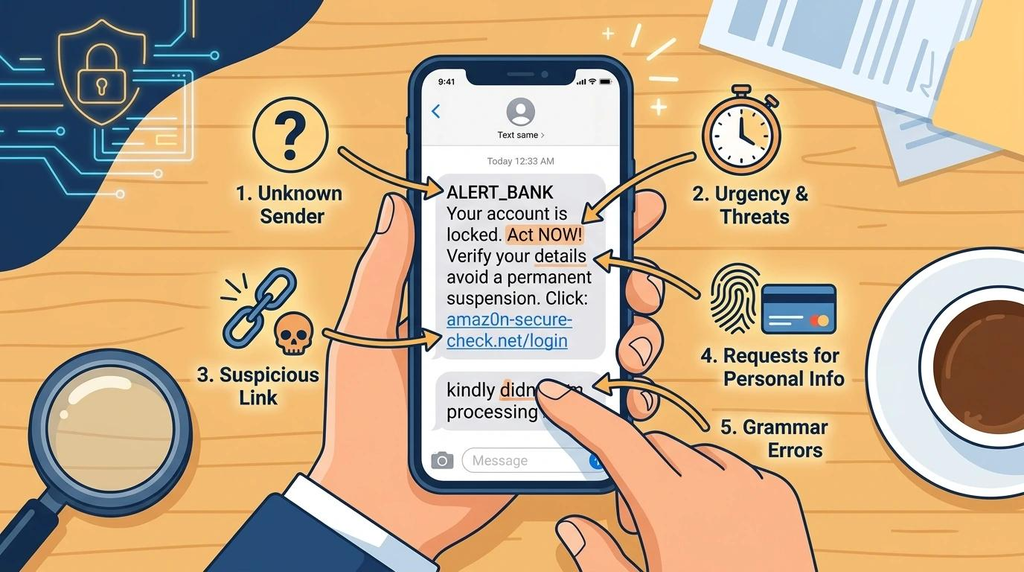
A scam is any attempt to trick you into sending money or revealing confidential information. They arrive through WhatsApp, Instagram, Facebook, email, text messages, online marketplaces, dating apps, and phone calls.
Nigerians are not only associated with scams elsewhere. Nigerians are also heavily targeted themselves. Industry commentary reported by BusinessDay has put annual electronic fraud losses in the region of over a trillion naira and has pointed to a lack of strong consumer-protection compensation compared with some other countries. Figures like these vary by source and year, so treat them as an indication of scale rather than a precise measure. The Central Bank of Nigeria (CBN) and the Economic and Financial Crimes Commission (EFCC) both regularly warn the public about fraud.
Four realistic examples
1. The “investment” that doubles overnight. A message arrives promising to turn ₦10,000 into ₦50,000 within days. The offer, you are told, expires tonight. Warning signs: an unrealistically high return and pressure to act at once.
2. The job that charges you to start. A recruiter offers remote work, but first you must pay ₦15,000 for “registration” or “training”. Warning signs: a genuine employer should not usually charge you to be hired. Verify the company and vacancy independently.
3. The too-cheap phone. An Instagram seller advertises a phone far below the usual price and wants full payment to a personal account before delivery. Warning signs: a price that is too good to be true, payment to an individual, and no way to verify the seller.
4. The “bank” that rings you. A caller says they are from your bank and need your PIN, password, or OTP to stop your account from being blocked. Warning signs: real banks do not ask for these. The EFCC has specifically warned Nigerians that handing over an OTP can allow criminals to drain an account, in one case describing a fake “SIM upgrade” scheme.
Warning signs at a glance
- Guaranteed profits or rewards that seem too good to be true.
- Pressure to pay immediately or to keep the offer secret.
- Requests for PINs, passwords, OTPs, your BVN, or other personal details you did not expect to give.
- Unexpected links asking you to log in or pay.
- Sellers or organisations you cannot verify independently.
- Requests for fees to unlock a prize, parcel, loan, or job.
Remember that a professional-looking website, a convincing logo or a warm, friendly chat proves nothing.
Six habits that keep you safer
- Pause. You never have to answer straight away. Saying “I will get back to you” is always allowed.
- Verify independently. Find the official number or website yourself. Do not use the one in the message.
- Avoid unexpected links. Open your bank’s official app or site directly.
- Guard your credentials. Your PIN, password, OTP, and BVN stay with you. Not even genuine bank staff need your OTP or PIN.
- Check before you transfer. Confirm who the recipient is, how much, and why.
- Keep records. Save receipts and screenshots, and turn on transaction alerts.
If you prefer scripts and structure (many people do), these six habits can be a laminated card in your wallet or a note on your phone. The UK’s Take Five to Stop Fraud campaign offers a similar pause-and-check approach that applies well beyond Britain.
Financial exploitation: when someone takes advantage
Financial exploitation means someone misusing, taking, or controlling another person’s money for their own benefit. It might involve a stranger, but it can just as easily be a friend, partner, relative, or someone who provides care.
It is important to be fair here. Helping with a bill, supporting a relative or having a trusted person manage money with your permission and understanding is not automatically exploitation. The warning signs are deception, pressure, secrecy, unauthorised access, or a refusal to respect your choices.
Examples worth recognising
- A friend who keeps borrowing. They ask for ₦5,000 or ₦10,000 “until Friday”, never repay and become angry if you stop lending.
- A partner who controls your account. They keep your ATM card and PIN, monitor every purchase, or move money without asking.
- A relative who misuses money you give for a purpose. You hand over cash for an electricity token or groceries, and part of it is spent elsewhere without explanation.
- An online “friend” with constant emergencies. A close relationship develops quickly, then comes a stream of requests for medical bills, transport or business costs. The story changes, or they discourage you from checking.
None of this means you should never lend or trust anyone. The questions to ask are: Is the arrangement voluntary, transparent, and consistent with what I want?
How to protect yourself
- Keep cards, PINs, passwords, and recovery details secure and private.
- Do not give anyone unrestricted access to your money just because they offer to help.
- Agree clearly what any money handed over is for, and ask for receipts.
- Check your statements and set up transaction alerts.
- If you need help, choose someone who respects your decisions and privacy.
If you suspect misuse, secure your accounts, preserve messages and transaction records, and seek independent advice. If the person involved is a family member or carer, look for an independent advocate rather than asking that same person to resolve it.
Rights that back you up
The UN Convention on the Rights of Persons with Disabilities recognises equal recognition before the law and calls for support to exercise legal capacity, rather than having decisions taken away. In Nigeria, the Discrimination Against Persons with Disabilities (Prohibition) Act 2018 prohibits discrimination and created the National Commission for Persons with Disabilities. If you are unsure of your rights, disability organisations such as the Joint National Association of Persons with Disabilities (JONAPWD) can point you towards advice.
Peer pressure: money in social situations
Money is rarely just money. It is also friendship, belonging, and, sometimes, unspoken rules about who pays for what. Many autistic adults tell us they find these unwritten rules confusing. Plenty of non-autistic people do too.
Everyday Nigerian situations
- The expensive ride. Friends propose a ride-hailing service when you had planned for a danfo or BRT.
- The restaurant bill split equally when you only had a drink.
- The gadget gap. Friends nudge you towards a pricier phone or bigger data plan.
- The loan request. A friend asks for ₦20,000 and says, “If you were really my friend, you would help me.”
- The social media pull. You feel you must own what people you follow own.
The issue is not whether you should enjoy spending. It is whether your spending reflects your priorities and circumstances rather than other people’s pressure.
Scripts you can borrow
Having ready-made sentences removes the need to improvise under pressure. Adapt the wording to sound like you.
| Situation | What you might say |
| An outing is too expensive | “That is outside my budget. I can join if we choose a cheaper option.” |
| Someone asks to borrow money | “I am not able to lend money right now.” |
| Someone wants an instant answer | “I need time to think about it. I will let you know later.” |
| A group wants to split the bill equally | “Can we each pay for what we ordered? That works better for my budget.” |
You do not owe anyone a long explanation. “No” and a short reason are enough. A friendship that cannot survive a polite “no” is telling you something worth hearing.
It can also help to decide on a spending limit before an outing and to check your budget before agreeing to a purchase, as we practised in Part 2.
Making informed purchases
An informed purchase means understanding what you are buying, what it really costs, whether it meets your need and what conditions apply. For some autistic people, comparing specifications is a joy. For others, too many options at once is exhausting. Either is fine.
Example: buying a smartphone for ₦250,000
Before paying, you might ask:
- Do I need a new phone, or does my current one still do the job?
- Is ₦250,000 affordable after transport, food, electricity, rent savings, and other essentials?
- Could a suitable phone cost less?
- Is the seller reputable, and is the phone new, used, or refurbished?
- Does the price include a warranty, and what does it cover?
- Are there extra costs such as delivery, accessories, repairs, or financing charges?
The cheapest option is not always best value, and the most expensive is not automatically the best. Aim for a balance of price, reliability, and your genuine needs.
Example: buying data
If you often run out of data and buy small bundles, compare the cost and validity period of different plans, think about your typical monthly usage and check whether a larger bundle would genuinely save money. A bigger bundle is not better if you cannot afford the upfront payment or will not use it before it expires.
Example: food and household essentials
Compare prices at markets and supermarkets, write a shopping list, and prioritise foods you will actually eat. Bulk-buying can lower the cost per item, but not if food spoils or leaves too little for transport or electricity.
A seven-point purchase checklist
Before a significant or non-essential purchase, ask yourself:
- Need: Do I need this, or do I want it right now?
- Affordability: Can I pay without compromising essentials?
- Comparison: Have I checked sensible alternatives and prices?
- Reliability: Is the seller genuine, and does the product match its claims?
- Terms: Do I understand delivery, warranty, returns and extra charges?
- Timing: Can this wait a day or a few days?
- Payment security: Am I using a secure method, and have I verified the recipient?
For bigger purchases, a 24-hour waiting period or a few days can reduce pressure and give you time to compare. It is a handy option, not a rule.
Be especially careful with instalments, buy-now-pay-later offers, and loans. Check the total repayment amount, interest, fees, late-payment consequences and whether you can afford every future instalment before you agree.
Choosing support that respects your independence
Needing help with money does not mean surrendering your right to decide. Some autistic adults manage everything alone. Others value occasional or ongoing support with certain tasks. Both are legitimate.
When trusted help may be useful
- A task feels overwhelming, such as organising bills or breaking down a complicated application.
- A major decision is involved, such as a loan, tenancy, or insurance. An independent, qualified adviser can explain it.
- Your income or expenses have changed, for example after losing a job.
- Debt or missed bills are becoming hard to manage.
- You have concerns about fraud or exploitation.
How to keep support safe
Choose someone who explains clearly, listens, respects your privacy and never pressures you to hand over control. Where possible:
- Agree exactly what help you want and what stays your responsibility.
- Keep your own PINs, passwords, and OTPs private.
- Keep access to your own statements and financial information.
- Seek a second opinion before big or irreversible decisions.
- Use an independent professional if the person offering help would benefit financially from your decision.
The goal of assistance is to strengthen your autonomy, never to replace it. A person can need help understanding a bill and still be entirely capable of deciding how their money is spent.
A financial-safety checklist
You might like to copy this into your notes app and tick it off before sending money or buying online.
- ☐ I have not shared my PIN, password, OTP or BVN with anyone.
- ☐ I have verified any unexpected request through an official channel that I found myself.
- ☐ I have paused, especially if the request was urgent, secret or promised guaranteed returns.
- ☐ I have compared prices, checked the seller and understood the terms.
- ☐ I am comfortable saying no to purchases or loans I cannot afford.
- ☐ I am keeping receipts, alerts and statements.
- ☐ I know what to do if something goes wrong.
What to do if something goes wrong
Even careful people get caught. If it happens to you:
- Contact your bank or payment provider straight away, through an official channel you have verified. Ask whether the transaction can be blocked, recalled or disputed.
- Secure your accounts. Change passwords and any compromised credentials.
- Save evidence: messages, receipts, account details, transaction references and screenshots.
- Report it. In Nigeria, you can report financial crime to the EFCC, report banking issues through your bank and the Central Bank of Nigeria consumer-protection channels, raise consumer complaints with the Federal Competition and Consumer Protection Commission, and report data-protection breaches to the Nigeria Data Protection Commission. You can also report to the police. Check each organisation’s official website for current contact details rather than relying on numbers in messages or social media posts.
- Reach out for support from a trusted person or independent adviser if you feel overwhelmed. Shame thrives in silence.
- Beware recovery scams. Anyone promising to get your money back in exchange for an upfront fee is very likely the next scammer.
Recovery is not guaranteed, but acting promptly often improves the chance of limiting further loss. And a financial mistake, however painful, does not mean you cannot manage money.
Frequently asked questions
Are autistic adults more likely to be scammed?
There is limited research, and individual experiences differ widely. Some studies report that some autistic adults have experienced financial abuse or exploitation, but autism does not automatically make anyone vulnerable. Clear safeguards help everyone.
What should I never share with anyone about my bank account?
Your PIN, password, one-time password (OTP) and BVN. Real banks and agencies should not ask you for these over the phone or by message.
How can I say no to a friend who keeps asking to borrow money?
Use a short, calm script such as, “I am not able to lend money right now.” You do not have to justify it at length.
How do I report fraud in Nigeria?
Contact your bank first, then consider reporting to the EFCC, the police, the CBN consumer-protection channels, the FCCPC or the NDPC as appropriate. Always use contact details from official websites.
Should I let a family member manage my money?
That is your decision. If you choose to, agree clearly what help is wanted, keep access to your own information, and seek independent advice for big decisions.
A gentle close to the series
Over these three articles we have covered a lot of ground. In Part 1, we saw why financial independence matters and why so many difficulties come from systems rather than from autistic people themselves. In Part 2, we built practical routines with budgets, automation, trackers and reminders. Here, we have focused on protection: spotting scams, spotting pressure and keeping control.
If you take only one thing from this series, let it be this: you are allowed to learn at your own pace, to ask for the kind of help that suits you, and to say “I need time to think about that” to anyone, at any time. Money is a tool for living your life, and your life is yours to direct.
If you have a money story you would like to share, or a strategy that has worked for you, please leave a comment. Lived experience is the most valuable resource we have.
Are you autistic, a family member, caregiver, teacher, professional, or advocate in the autism community? We’d love to hear your story! Fill out our short interest form now, and we’ll be in touch.