

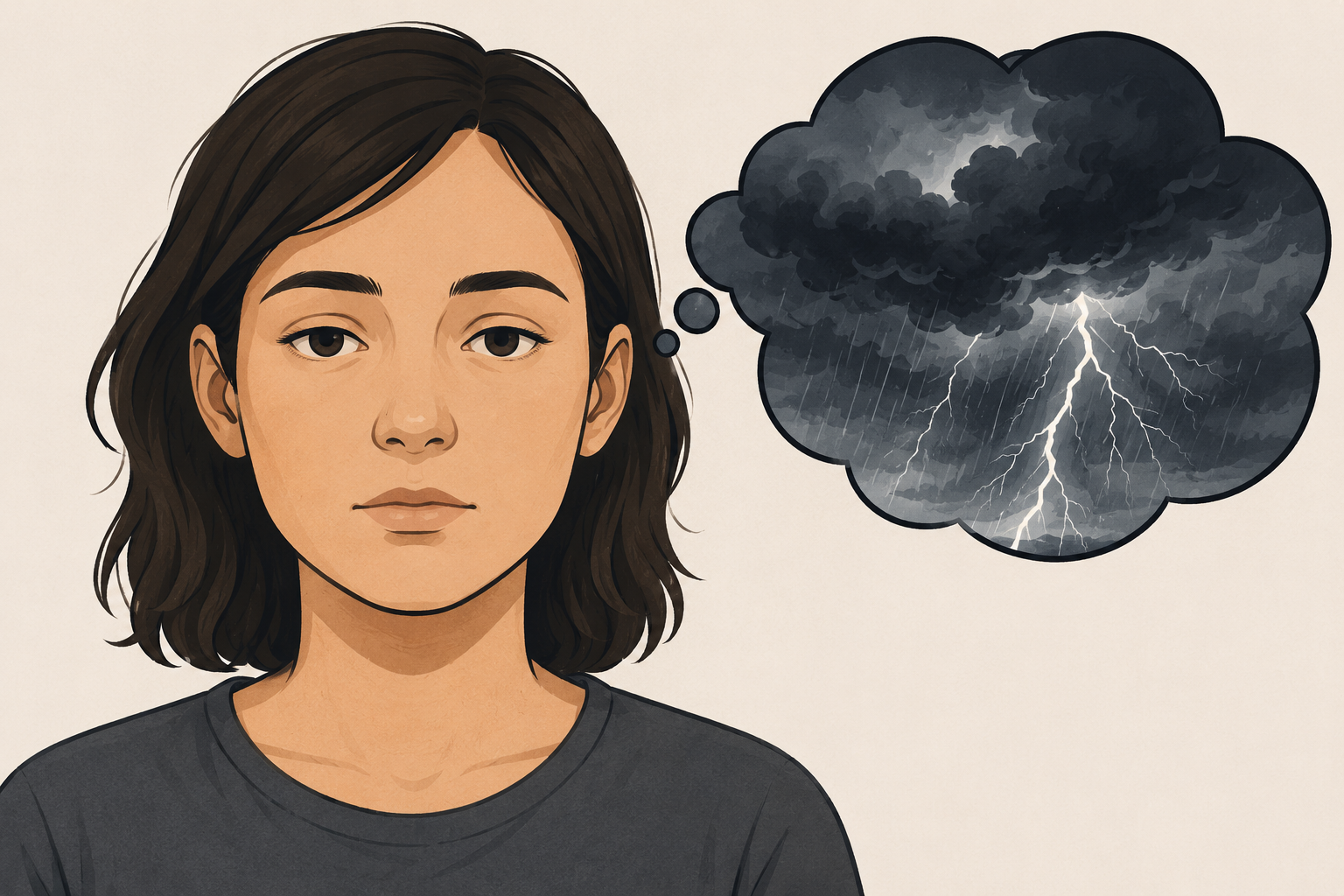
If you’ve spent time on social media recently, you may have seen the viral clip that stitches together the “women are too emotional” stereotype with footage of grown male footballers screaming, crying and rolling around after a bad tackle. It is humorous because it highlights an uncomfortable truth: discussions about autism and emotions often begin with the mistaken assumption that emotions themselves belong more to some people than others.
In reality, emotions are part of being human. Whether someone is male, female, or intersex, we all experience emotions, including joy, sadness, anger, fear, excitement, and frustration. What differs is not our capacity to feel emotions but often how we learn to express them.
For generations, phrases like “men are logical, women are emotional” have shaped how people understand emotions. However, research suggests that men and women experience the same basic emotions, with differences in expression often influenced more by socialisation than biology. From an early age, many boys are taught to suppress their emotions through messages like “man up” or “boys don’t cry,” while girls are often given more permission to express sadness or vulnerability. Over time, these repeated messages become so deeply ingrained that they feel natural, even though they are learned.
A conversation I had with a university friend a couple of weeks ago brought this into sharp focus. He told me that whenever he cried or became upset as a child, adults would immediately tell him to “man up.” It made me wonder why we expect a child to stop behaving like a child simply because he is a boy. Children learn through repetition, observation, and reinforcement. When a boy repeatedly receives the message that expressing emotions is a weakness, he may grow into an adult who hides his emotions, not because he doesn’t feel them, but because he has learned that expressing them carries a social cost.
Ironically, this stereotype that men are somewhat naturally more logical than women doesn’t stand up particularly well when we look at broader patterns of behaviour. Men account for the overwhelming majority of violent crime offenders across many countries, while also being significantly more likely to die by suicide. For example, men make up around 80% of homicide victims and perpetrators globally (pdf), according to the United Nations, and they account for roughly three-quarters of suicide deaths worldwide, per the World Health Organization. These statistics do not mean men are inherently irrational or violent. Rather, they remind us that having male biological characteristics does not automatically make someone more logical or less emotional. Human behaviour is influenced by a complex interaction of biology, environment, culture, upbringing, and life experiences.
This isn’t to say biology plays no role at all. Biological sex influences many physical characteristics. On average, males have greater muscle mass and upper-body strength than females because of hormonal differences, particularly testosterone. Those are biological differences associated with sex. But emotional expression is a different matter. There is no biological rule stating that boys should hide their feelings or that girls should express theirs. Those are expectations created and reinforced by society.
Someone might ask, “What about psychopaths? Don’t they lack emotions?” The answer is more nuanced than many people realise. People with traits associated with psychopathy are generally capable of experiencing emotions. However, research suggests they may have reduced emotional responses in certain situations, particularly emotions such as fear, guilt ,and remorse, and they may process other people’s distress differently. This is very different from not having emotions at all. The vast majority of people, regardless of personality or neurotype, experience emotions in one form or another.
So, what does this have to do with autism? The key point is that everyone experiences emotions, and autistic people are no exception. The difference is not whether autistic people have emotions, but how those emotions are experienced, processed, regulated, and expressed. Understanding this helps us move beyond stereotypes and better support autistic children and adults.
Emotion isn’t the problem. Recognising it in autism is
One of the misconceptions I run into the most is that autistic people either don’t have feelings or don’t care about anyone else. Neither is true. What’s actually going on is a difference in processing, not a lack of feeling.
In other words, the connection between autism and emotions is not about whether autistic people feel but how they feel and communicate those feelings. Some autistic people experience emotions very intensely, while others may find it difficult to identify exactly what they are feeling in the moment. Some openly express joy, excitement, or frustration, whereas others may appear calm on the outside despite experiencing overwhelming emotions internally. Because autism is a spectrum, these experiences vary from one individual to another.
Honestly, the hardest part for me isn’t feeling something but naming it. There are days I know something is wrong because my body has gone tight and uncomfortable, but I genuinely cannot tell you whether I’m anxious, sad, frustrated, or just in pain. I only know something is off. And until I can put a word to it, I can’t explain it to you either, which can look a lot like indifference when it’s actually the opposite.
This experience has a name: alexithymia, from the Greek meaning “no words for emotions.” Despite the name, it does not mean someone has no emotions. It means they find it difficult to recognise, distinguish, and describe what they’re feeling.
Alexithymia isn’t the same thing as autism, but it is far more common among autistic people than in the general population. Research estimates that while around 10% of the general population experience alexithymia, between 40% and 65% of autistic people do, although estimates vary between studies. This has led researchers to argue that many of the emotional difficulties traditionally attributed to autism may actually be explained, at least in part, by co-occurring alexithymia.
Think of it like this. Imagine your body is constantly sending messages to your brain.
“Your heart is beating faster.”
“Your stomach feels tight.”
“Your shoulders are tense.”
“Your breathing has changed.”
For most people, the brain automatically translates those physical sensations into emotions:
“I’m nervous.”
“I’m excited.”
“I’m angry.”
“I’m embarrassed.”
For many autistic people with alexithymia, that translation step doesn’t happen automatically.
The body is still sending the messages. The brain simply struggles to attach the right emotional label to them.
That’s why someone might say, “I know something feels wrong, but I honestly don’t know what it is.” They may notice their heart racing or their muscles tensing, but not know whether they’re anxious, overwhelmed, excited, or frustrated. Sometimes, “I don’t know” is the most honest answer they can give.
This also explains why emotional responses can appear delayed. Many autistic people don’t experience emotions later; they identify them later. The emotion may have been there all along, but it can take hours, days, or even weeks before the brain works out exactly what it was.
If you’ve ever felt “off” without being able to explain why, that’s a real and well-documented experience shared by many autistic people. It’s not being dramatic, vague, or emotionally detached. It’s the brain taking longer to translate internal experiences into words.
However, there is another factor worth considering, particularly in many African communities: emotional expression is not always something children are taught or encouraged to practise. Many of us grow up being told to stay quiet, not question adults, or keep our thoughts and feelings to ourselves. Over time, this can make it harder to identify, communicate, and regulate emotions in healthy ways.
This experience can affect autistic and non-autistic people alike, but it is important to distinguish it from alexithymia. While culture can influence how comfortable someone feels expressing emotions, alexithymia involves genuine differences in recognising and describing emotions that arise from how a person processes their internal experiences. For some autistic people, it forms part of their neurological profile rather than simply reflecting upbringing or personality.
Why does this happen? Your body holds part of the answer
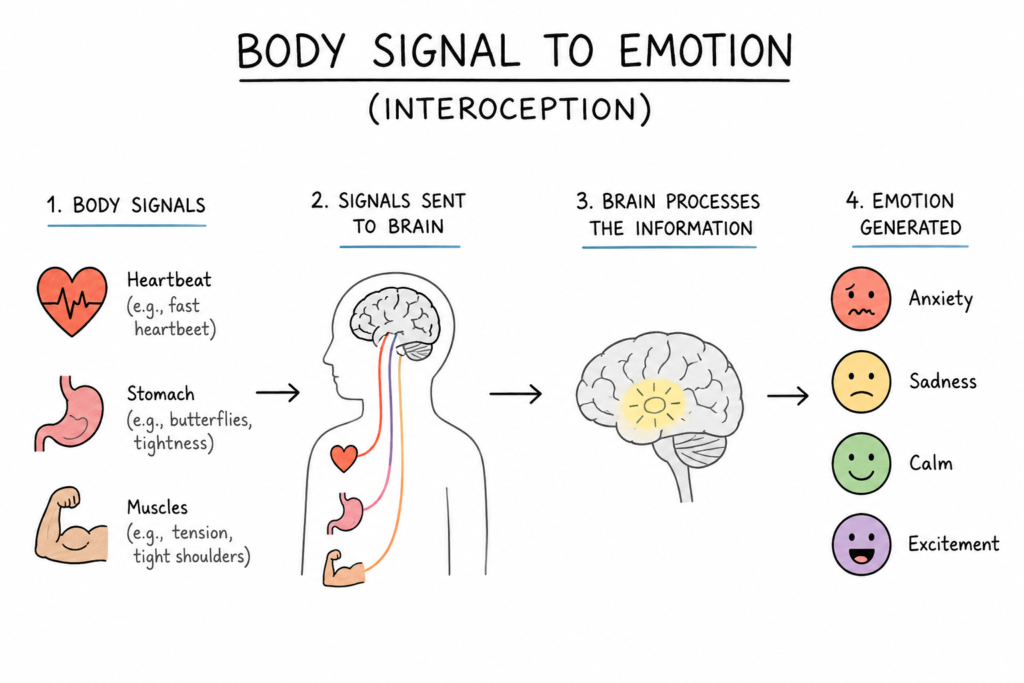
A lot of this comes down to interoception, our ability to notice and interpret signals from inside our own body. Think of interoception as your body’s internal dashboard. It keeps track of things like your heartbeat, breathing, hunger, thirst, muscle tension, temperature, and pain. Those physical sensations are one of the ways the brain works out what we’re feeling.
For many autistic people, that dashboard works a little differently. The signals may be harder to notice, slower to interpret, or more difficult to connect to a particular emotion. Instead of immediately recognising “I’m anxious,” someone may simply notice a racing heart and a tight chest without understanding what those sensations mean emotionally. The emotional label often comes later, sometimes much later.
Besides, studies have found that differences in interoception are linked to higher rates of alexithymia in autistic people, helping explain why recognising emotions can be difficult even when those emotions are experienced just as intensely.
Interoception not only affects recognising emotions; it also affects identifying our body’s needs. The NHS-run Autism Space service explains that when interoception works differently, “a person may only realise they are hungry, thirsty, tired, or overwhelmed when the feeling becomes very strong,” which can lead to sudden distress or shutdown.
This also explains why different emotions can blur together. Anxiety and excitement both make your heart beat faster. Anger and fear can both make your muscles tense. Sadness and exhaustion can both make you want to withdraw. Without a clear internal translation, all of those experiences can simply feel like something isn’t right.
Add sensory processing into the mix — bright lights, background noise blurring into one wall of sound, an itchy label in your shirt — and you can see why the brain sometimes has no spare capacity left to figure out what it’s actually feeling on top of everything else.
Then there’s timing. Emotional processing, for me, is often delayed. I remember my boss once shared news that changed things significantly at work. Everyone around me seemed to understand what it meant for them within days. It took me about six weeks. Not because I didn’t care — I cared a great deal — but because I needed that much time to actually catch up with my own emotions.
Why reading facial expressions isn’t always straightforward
Alexithymia doesn’t only affect recognising your own emotions. Research suggests it may also contribute to why some autistic people find it difficult to recognise emotions from other people’s facial expressions.
Most people don’t consciously analyse a face. Their brain automatically combines tiny cues from the eyes, eyebrows, mouth, tone of voice, and body language to work out how someone feels.
For some autistic people, that process is far less automatic. Instead of instantly recognising that someone looks worried, annoyed, or embarrassed, they may need to consciously work it out, almost like solving a puzzle.
This is one reason why direct communication is often much more helpful than relying on subtle facial expressions or hints. Rather than expecting an autistic person to guess how you feel, saying it clearly is usually the kinder and more effective approach.
The same applies in reverse. Autistic people’s own facial expressions don’t always match what they’re feeling inside. Someone may appear calm when they’re overwhelmed, smile when they’re anxious, or show very little outward expression despite experiencing powerful emotions.
Can you tell how I’m feeling by looking at my face? Probably not, and that matters
Many autistic people, including me, don’t reliably show emotion on our faces the way people expect. Sometimes my face stays neutral while I’m feeling something intensely. Sometimes, what shows up on my face doesn’t match what’s happening inside at all. I might look calm while I’m quietly panicking or look unbothered while I’m deeply moved. I’m not performing a mismatch on purpose. My facial expressions simply aren’t a reliable window into what I feel.
This isn’t just anecdotal. Researchers describe it as part of the double empathy problem, a theory developed by the autistic researcher Dr Damian Milton, which reframes communication difficulties between autistic and non-autistic people as a two-way mismatch rather than a one-sided deficit in the autistic person.
Also, studies have found that non-autistic observers often misread autistic facial expressions as more intense or more negative than they were meant to be and that autistic and non-autistic faces can even use different muscles to express the same emotion. Autistic expressions of anger, for instance, have been found to rely more on the mouth than the eyebrows. Interestingly, autistic people tend to understand each other’s expressions and cues far more easily than non-autistic people understand them. The breakdown happens specifically across neurotypes, not within them.
Practically, here’s what that means: please don’t assume you can read my face and know how I feel. If it matters to you, ask. And if you’re autistic and reading this, you’re allowed to say, “I don’t know how to show this on my face, but I promise I feel it.” That sentence has done more for my relationships than any amount of forced eye contact or performed smiling ever did.
Other ways I (and many autistic people) express emotion instead of, or alongside, facial expression:
- Going quiet or needing to physically leave a space
- Talking in a flatter or more clipped tone than intended
- Repetitive movement, such as hand-flapping, pacing, and fidgeting
- Writing it down rather than saying it out loud
- Needing time alone before I can explain anything at all
None of these means “I don’t care.” They mean “I care, and this is how it’s coming out today.”
The emotions autistic people actually describe
Ask people with autism directly (rather than guessing on our behalf), and a few patterns come up again and again:
- Feeling things intensely. When emotions like joy, excitement, or disappointment land, they land hard. This isn’t performative; it tracks with how the autistic brain tends to process information more broadly.
- Delayed responses. As above, the feeling may not surface until well after the event, once there’s finally space to reflect.
- Overwhelm that looks sudden but isn’t. A “small” trigger rarely tells the whole story. It’s usually the final straw in a pile that’s been building all day, including sensory overload, social effort, and a change of plan, none of which is visible from the outside.
- A strong pull toward fairness. Inconsistency and unclear expectations can cause real distress, not because we’re being difficult, but because unclear rules are genuinely hard to parse.
- Needing real recovery time. Alone time, familiar routines, or less sensory input isn’t avoidance. It’s the nervous system rebalancing.
- Meltdowns and shutdowns deserve their own mention, because they’re two of the most misunderstood autistic experiences. A meltdown is an involuntary response to overload, not a tantrum or manipulation, and can involve crying, shouting, or physical distress. A shutdown is the quieter opposite: withdrawal, loss of speech, and a kind of internal “power-saving mode” while the system tries to protect itself. Neither is chosen. Both are signals that capacity has run out.
So what actually helps?
If you’re autistic, a few things that have genuinely helped me:
- Naming triggers before they build up, such as sensory load, social exhaustion, unexpected change, hunger, and tiredness. Patterns are easier to catch early than to interrupt mid-overwhelm.
- Building a small regulation toolkit, like noise-cancelling headphones, a quiet corner, a fidget object, and a favourite playlist. Nothing dramatic, just reliable.
- Preparing communication for the moments words don’t come such as a written note, a phrase you’ve agreed on in advance, or even a single emoji that means “I need space.”
- Letting predictability do some of the emotional labour for you. Schedules and advance notice aren’t rigid but a relief.
- Giving yourself the recovery time without guilt. Needing to lie in a dark room after a hard day isn’t a weakness but maintenance.
If you love or work with an autistic person, the single most useful shift is this: stop reading the face and start asking the question.
Try “I can see this is hard right now” instead of “calm down.” Give notice before changes. Don’t demand eye contact as proof of listening. And when someone goes quiet, or their face doesn’t match the moment, don’t assume you already know what that means.
A closing thought
Autistic people are not short on emotion. If anything, many of us are managing a system running at higher intensity, with a translation layer between feeling and naming that takes longer to load and an expression layer that doesn’t always broadcast what’s happening underneath. None of that makes the emotion smaller. It just means the road from feeling it to showing it takes a different route.
If you’ve read this far and recognised yourself in any of it, you’re not broken, and you’re not alone in this. And if you’ve read this to understand someone else better, thank you. That’s exactly the kind of listening that makes the difference.