

How autistic adults can keep track of bills, budgets, and savings without the stress
In Part 1, we looked at why money matters, what the research says, and why so much financial difficulty is about systems — money management tools — rather than people. Now for the part many readers have been waiting for: what do you actually do on a Tuesday afternoon when the electricity token has run out, data is nearly gone, and payday is still nine days away?
The honest answer is to build a small system and let it carry some of the load. This article walks through four tools that many autistic adults find helpful (and that plenty of non-autistic people use too): predictable budgets, automatic payments, visual trackers and reminders. We use Nigerian examples throughout, including transport fares, food, mobile data, prepaid electricity, annual rent, and emergency savings.
A few ground rules before we start:
- Every naira figure below is illustrative. It is not a current market price or a recommended budget. Your numbers will differ.
- You do not need all four tools. Pick the one that feels easiest and start there.
- If your income does not cover your essentials, no budgeting method can fix that on its own. We say more about this later, and it is not your fault.
Why predictability helps
Many autistic adults describe feeling calmer when they know what to expect. Whether or not that applies to you, there is a practical logic behind routines in money management. Every unplanned financial decision uses up attention. If you have already decided that ₦5,000 a week goes to transport, you do not need to re-argue that decision every time you leave the house.
Psychologists call this idea “implementation intentions”, specific “if-then” plans that link a situation to an action. In a well-known review, Peter Gollwitzer, writing in American Psychologist (1999), described how making a concrete plan about when and how you will act helps people follow through on their intentions.
“On payday, I will move money into my rent savings” is far more likely to happen than “I should save more”. This is general behavioural science rather than autism-specific research, but it fits neatly with the structured routines many autistic people already prefer.
The National Autistic Society makes a similar point through its free Managing Money module, built with MoneySuperMarket: it helps learners recognise their own strengths and challenges rather than assuming one fixed approach.
Tool 1: A predictable budget
A budget is simply a plan for the money you have over a set period, usually a month. It separates what you must pay from what you would like to spend and shows what is left.
A Lagos example: ₦150,000 a month
Imagine an autistic adult in Lagos earning ₦400,000 a month from a job or other reliable source. They want transport, food, data, electricity, rent savings, and emergencies all accounted for.
| Category | Amount (₦) |
| Food, groceries, and toiletries | 120,000 |
| Transport fares | 30,000 |
| Rent savings | 100,000 |
| Electricity | 25,000 |
| Mobile data | 25,000 |
| Emergency savings | 50,000 |
| Other needs and personal spending | 50,000 |
| Total | 400,000 |
Two notes on reading this table. First, the ₦100,000 for rent is money set aside towards a future payment, not necessarily rent due each month. Second, the ₦50,000 for other needs and personal spending is deliberately generous. It covers anything that does not fit elsewhere, including a hobby or special interest, which is a legitimate use of money.
How each line helps
- Transport: Dividing the monthly figure into a weekly allowance means you can see at a glance whether you can afford an extra journey.
- Food: Planning groceries reduces last-minute spending when you are hungry or tired.
- Data: Putting data in the budget stops repeated small top-ups from quietly eating money meant for other things.
- Electricity: Setting aside money for tokens means a dark flat is less likely to be the first sign of a problem.
- Rent: Saving gradually makes a large payment feel less like a cliff edge.
- Emergencies: Even a small amount helps with a surprise repair, medical cost, or fare hike.
Rent in Nigeria deserves special attention
In many parts of Nigeria, rent is paid annually or for a long period in advance, which is a very different rhythm from monthly rent elsewhere. If your rent is ₦1,200,000 a year, saving ₦100,000 a month builds the full amount over 12 months, provided your income allows it and the rent does not rise. If you are required to pay a lump sum, it is wise to ask in writing what is included, when it is due, and what happens if you are a few days late.
Keep it flexible
A predictable budget does not have to be rigid. If transport fares jump or food becomes more expensive, you can revise your allocations. Think of it like adjusting a recipe, not failing an exam.
Tool 2: Automatic payments and scheduled transfers
Automation reduces the number of things you must remember. Depending on your bank and service providers, it might include standing orders, scheduled transfers, recurring subscriptions, or direct collection for regular bills.
Nigerian examples
- Mobile data: If you rely on data for work, study or communication, a recurring plan or renewal option may be available from your network provider. Before choosing it, confirm the price, the renewal date, and how to cancel.
- Electricity: Many households use prepaid meters, which require you to buy a token when credit runs low. Not every meter or provider supports automatic payment, so do not assume yours does. A more realistic approach is a reminder, or a small scheduled transfer into a separate “electricity” pot that you can draw from when you buy tokens.
- Rent savings: If you receive a regular salary, you might arrange a scheduled transfer into a separate savings account shortly after payday, where your bank supports this. Another option is to use a fintech platform like Cowrywise or PiggyVest, enabling automatic deduction into your rent savings. Saving before you start spending is one of the simplest habits to build.
- Regular bills: Where a provider offers automatic collection, you might set it up and then check that each payment has gone through.
A worked example
Suppose you are paid on the 25th of each month. You could schedule a transfer on the 26th into a rent-savings account. By the time you start thinking about everyday spending, that money has already been set aside.
The safeguards you need
Automation is useful but not magic. Keep these points in mind:
- Check your balance before scheduled payments. If the money is not there, a payment may fail or trigger a charge.
- Review your statements regularly. Subscriptions can quietly renew at a higher price.
- Keep manual reminders for bills you cannot automate.
- Never share your PIN, password, OTP or BVN with anyone offering to “set things up” for you. The Economic and Financial Crimes Commission (EFCC) has warned Nigerians not to give out OTPs, since doing so can allow scammers to empty an account.
Automation is also not always an option. If your income is irregular, rigid scheduled payments can cause more stress than they remove. In that case, reminders and a flexible weekly plan may suit you better.
Tool 3: Visual trackers
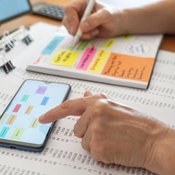
A visual tracker shows your money in a form you can understand quickly: a chart, a checklist, a spreadsheet, a banking app, or a hand-drawn progress bar. It answers the question “How much do I have left?” without needing mental arithmetic.
This ties back to Temple Grandin’s observation, from Part 1, that people think in different ways. If you think visually, a colour-coded chart may be far clearer than a column of numbers. If you prefer text, a short written list works just as well. Visual tracking is an option, not a requirement. (It is also worth saying that research on specific tools for autistic adults is still limited, so treat these as sensible suggestions to try rather than proven prescriptions.)
Example: a weekly transport and data tracker
Suppose you set aside ₦6,000 a week for transport and ₦3,000 for mobile data. You write down what you spend as it happens.
| Category | Weekly allowance (₦) | Spent so far (₦) | Remaining (₦) |
| Transport fares | 6,000 | 4,200 | 1,800 |
| Mobile data | 3,000 | 2,000 | 1,000 |
| Combined | 9,000 | 6,400 | 2,800 |
From this, you can see that ₦1,800 is left for transport and ₦1,000 for data. That helps you decide whether to take another trip, ease off streaming or adjust next week’s plan. Nothing in this table connects to a bank account. It is a worked illustration you can copy into a notebook or spreadsheet.
Example: tracking rent savings
A rent tracker might look like this:
- Target: ₦1,000,000
- Saved so far: ₦250,000
- Still to save: ₦750,000
A simple progress bar, with a section coloured in each time you add to it, can make a long goal feel real. Set the target and timeline according to your actual rent and income.
Example: an emergency fund
Rather than staring at a large final target, record small contributions whenever you can afford them. If money is tight and essentials come first, then not saving that month is not a personal failure. In Part 1, we noted that a 2024 survey of autistic adults in Australia, published in the journal Autism, linked small savings and avoiding debt with better financial wellbeing. But the same study connected lower income with worse wellbeing, a reminder that habits help but do not replace adequate income.
Tool 4: Reminders
Reminders are prompts on a phone, calendar, smartwatch, or paper planner. They help because they move the burden of remembering out of your head and into something that does not forget.
A sample Nigerian reminder schedule
| When | Reminder |
| Payday | Check the amount received and plan spending |
| First week of the month | Review food costs, transport needs and data plans |
| Before the electricity token runs low | Check the meter and prepare money for a token |
| Weekly, such as Sunday evening | Review spending and plan next week’s transport allowance |
| Monthly | Check rent savings and emergency savings |
| Before a subscription renews | Confirm the price and decide whether to continue |
Write reminders that tell you what to do
Vague messages such as “sort out finances” are easy to ignore. Specific ones are much easier to act on:
- “Check electricity meter and buy a token if needed.”
- “Review this week’s transport spending.”
- “Check data balance before buying another bundle.”
- “Transfer the planned amount into rent savings if affordable.”
This is the same principle as Gollwitzer’s if-then planning: the more concrete the prompt, the easier it is to follow.
Do not overdo it
Too many alerts become noise, and for some people they become stressful. Aim for a small number of clear reminders at times when you can realistically act on them. If you notice yourself silencing them, that is a sign to simplify.
A template you can copy: ₦200,000 a month
Here is a second example, this time for someone earning ₦200,000 a month. It includes healthcare and personal care, which is easy to overlook.
| Category | Amount (₦) |
| Rent or rent savings | 50,000 |
| Food and groceries | 45,000 |
| Transport fares | 25,000 |
| Electricity | 10,000 |
| Mobile data and airtime | 8,000 |
| Emergency savings | 12,000 |
| Healthcare and personal care | 15,000 |
| Other expenses and flexibility | 35,000 |
| Total allocated | 200,000 |
This is not an estimate of living costs in Nigeria. Someone living with family may need far less for rent. Someone living alone in Lagos may need considerably more. People supporting children or relatives will have different priorities again.
How to make the budget your own
- Start with your actual take-home income, after any deductions.
- Estimate essentials from real evidence: recent receipts, bills, and bank transactions.
- Include irregular costs where you can, such as clothing, repairs, school fees, or annual insurance.
- Leave a little slack. If every naira is allocated, one surprise will break the plan.
- Review weekly and adjust when prices or circumstances change.
If your planned expenses are higher than your income, please do not conclude that you have failed. Look first at what is essential, what can realistically change and what support might be available.
A simple bill calendar
A bill calendar records when each payment is due and what you need to do. A notebook, phone calendar, or wall planner all work. The dates below are examples, not official Nigerian deadlines.
| Date or frequency | Task | Why |
| Payday | Check income and organise the budget | Allocate money before spending |
| 1st of the month | Review rent savings | Track progress to the next rent payment |
| Every Monday | Review transport and food spending | See what remains for the week |
| 5th | Review data and airtime | Renew only if needed and affordable |
| 10th | Check electricity meter or bill | Buy a token or pay if due |
| 15th | Review bank transactions | Spot unexpected or unfamiliar charges |
| Last weekend of the month | Review savings and upcoming costs | Prepare next month’s budget |
Change the dates to match your own arrangements. If a bill is due on the 10th, set a reminder a few days earlier so you can check the amount and make sure the money is there.
Remember that a reminder is a prompt, not proof. After paying, check the receipt or transaction history.
A six-point weekly check
You might like to tick through these once a week:
- Check rent savings.
- Check the food and transport budget.
- Check data and airtime.
- Check electricity balance or bill.
- Review bank transactions.
- Update emergency savings.
A routine that ties it all together
Start small. You do not need an elaborate spreadsheet.
- On payday: Check what has arrived and allocate money for essentials, rent and savings where affordable.
- During the week: Note down transport, food, data and other everyday costs in a notebook or app.
- Before bills are due: Check your balance, confirm the amount and pay in a way you understand and trust.
- End of the week: Review what you spent and adjust the rest of the budget if needed.
- End of the month: Look ahead at upcoming costs, check for suspicious transactions and decide whether you need any extra support.
Putting it into practice: a short scenario
Picture Ada, an autistic adult in Lagos with a regular income. On payday, she spends 15 minutes allocating her money into the categories above. A scheduled transfer moves her rent savings into a separate account the next day. During the week she jots spending into a small notebook, with a colour-coded page for transport and data. On Sunday evening, a single phone reminder prompts her to review the week. On the 10th, another prompts her to check the meter. Nothing about this is dramatic, and that is exactly the point. The system works because it is dull, small, and repeatable.
When the income simply is not enough
It would be dishonest to pretend that clever systems solve everything. If your essential costs exceed your income, the problem is not your organisation. Rising prices, irregular work, and employment barriers all contribute.
In that situation, some sensible priorities are:
- Cover essentials first: food, shelter, electricity, and transport to work.
- Reduce avoidable fees, such as repeated small top-ups and unnecessary charges.
- Seek income support where possible, including employment programmes or disability networks. In Nigeria, the National Commission for Persons with Disabilities, established under the Discrimination Against Persons with Disabilities (Prohibition) Act 2018, and organisations such as JONAPWD can signpost advocacy and opportunities.
- Build a very small buffer when you can, even if it is only a few hundred naira at a time.
- Talk to providers early if a bill becomes impossible to pay, rather than avoiding the problem.
Outside Nigeria, free tools such as MoneyHelper’s Budget Planner in the UK can help you structure a budget, and StepChange offers free debt advice.
Frequently asked questions
What is the best budgeting method for autistic adults?
There is no single best method. Some people prefer detailed spreadsheets; others do better with a simple weekly cash allowance or a visual tracker. Choose the method you can maintain when you are tired.
How can I remember to pay bills if I forget deadlines?
Combine tools: scheduled transfers for fixed costs, specific phone reminders for variable ones, and a weekly check. Always confirm payments have been processed.
Are automatic payments safe?
They can be, provided you understand the cost and terms, keep enough money in the account, review statements and never share your PIN, password, OTP, or BVN with anyone.
How do I save for annual rent in Nigeria?
Divide the total by the number of months you have. For example, ₦600,000 over 12 months is ₦50,000 a month. Use a separate account if possible, and adjust if the rent changes.
What if I cannot save anything?
That is common and is not a personal failing. Focus on essentials, avoid unnecessary fees, and explore income and support options.
What’s more
The best money system is the one you will actually use. It might be a notebook and a pencil or a banking app and three phone alerts. It might change over time. What matters is that it reduces stress rather than adding to it.
In Part 3, we turn to protection: how to recognise scams, handle financial pressure from other people, and make purchases you will not regret.
All naira figures are illustrative and not personal financial advice. Please adjust to your own income, costs and circumstances.
Share your story!
Are you autistic, a family member, caregiver, teacher, professional, or advocate in the autism community? We’d love to hear your story! Fill out our short interest form now, and we’ll be in touch.