
If you read part one, you already know the basics: sensory overload isn’t about being “too sensitive” but about a nervous system that processes the world differently, becoming overwhelmed by too much input at once. It builds up faster than most people realise and is often misunderstood from the outside.
In real life, it never starts dramatically. Sensory overload creeps.
The early signs are quiet enough to dismiss. Concentration blurs at the edges. You’re following the conversation but not quite landing inside it. Small things, including a sound in the background, the texture of something against your skin, and the particular quality of the light, start pushing forward instead of fading. There’s an increasing sense of effort, vague and hard to name, like the volume on everything has been nudged up a notch without anyone touching the dial.
From the outside, someone in this early stage just looks a little quiet. Maybe slightly slower to respond. Nothing that obviously signals anything is wrong. But internally, more of the system is already being redirected just to keep up.
As the load builds, things start to slip. Thinking becomes slower, less organised. Words feel further away. Conversations are harder to follow, not because hearing is the problem, but because everything is arriving simultaneously without clear separation. There’s a sensation of holding too many threads at once while more keep being handed over.
By this point, if you know what you’re looking for, you can usually see it. Someone is withdrawing from the conversation. Reduced eye contact. Going very still, or the opposite — restless, shifting, and unable to settle.
Self-soothing behaviours appear: covering ears, rubbing hands together, pacing, and rocking. These aren’t random tics. They’re the nervous system trying to regulate itself under increasing pressure. Repetitive movement can help create calm, relieve stress, or block out the input that’s becoming too much. The body is looking for something it can control.
If the overload isn’t relieved, one of two things tends to happen next: meltdown or shutdown.
Meltdown versus shutdown
A meltdown doesn’t look the same in every person, but the underlying mechanism is consistent: the nervous system has become overwhelmed beyond its capacity, and the response is involuntary. It is not goal-directed or strategic like a tantrum, which is aimed at achieving or avoiding something. A meltdown is not aimed at anything; it is an overflow of stress, sensory input, and emotional load.
It can appear in different ways depending on the person. Some may cry uncontrollably, struggle to speak, or repeat words because they cannot process language clearly. Others may become physically agitated, pacing, shaking, or reacting impulsively to their surroundings as the body enters a state of overload. Some shut down instead, going silent, unresponsive, or seemingly “frozen”, unable to engage or communicate.
Across all forms, the core experience is the same: the system has reached its limit, and what follows is an automatic release rather than a chosen behaviour.
A shutdown, on the other hand, is less visible and therefore more often misunderstood or missed entirely. Where a meltdown moves outward, a shutdown turns inward. It is a protective “freeze” response that occurs when the nervous system is overwhelmed and can no longer process input or continue engaging with the environment.
In this state, a person may become unresponsive, stop speaking, avoid eye contact, or withdraw completely. They might appear distant or “not present,” even though they are still aware to some degree. From the outside, this can easily be misread as disengagement, irritation, sulking, or simply being in a bad mood, because there is often no obvious distress signal, like crying or agitation.
Because a shutdown is quiet and does not disrupt the environment, it is often overlooked or dismissed, and the person may not receive support when they need it most. Internally, however, it is not a passive choice or a lack of interest; it is a state of reduced capacity where thinking, speaking, and responding become temporarily inaccessible.
In essence, a shutdown is the nervous system’s way of reducing input to prevent further overload. While it may look like withdrawal from the outside, it is actually a form of protection when continuing to engage has become too much to process.
Neither a meltdown nor a shutdown is a choice. Both are what a nervous system looks like at its limit.
Why sensory overload seems to come out of nowhere
Surprisingly, overload is rarely caused by one single event. More often, it’s the result of hours of accumulation, which is exactly why it can seem to arrive without warning, because by the time it tips over, it’s been building all day.
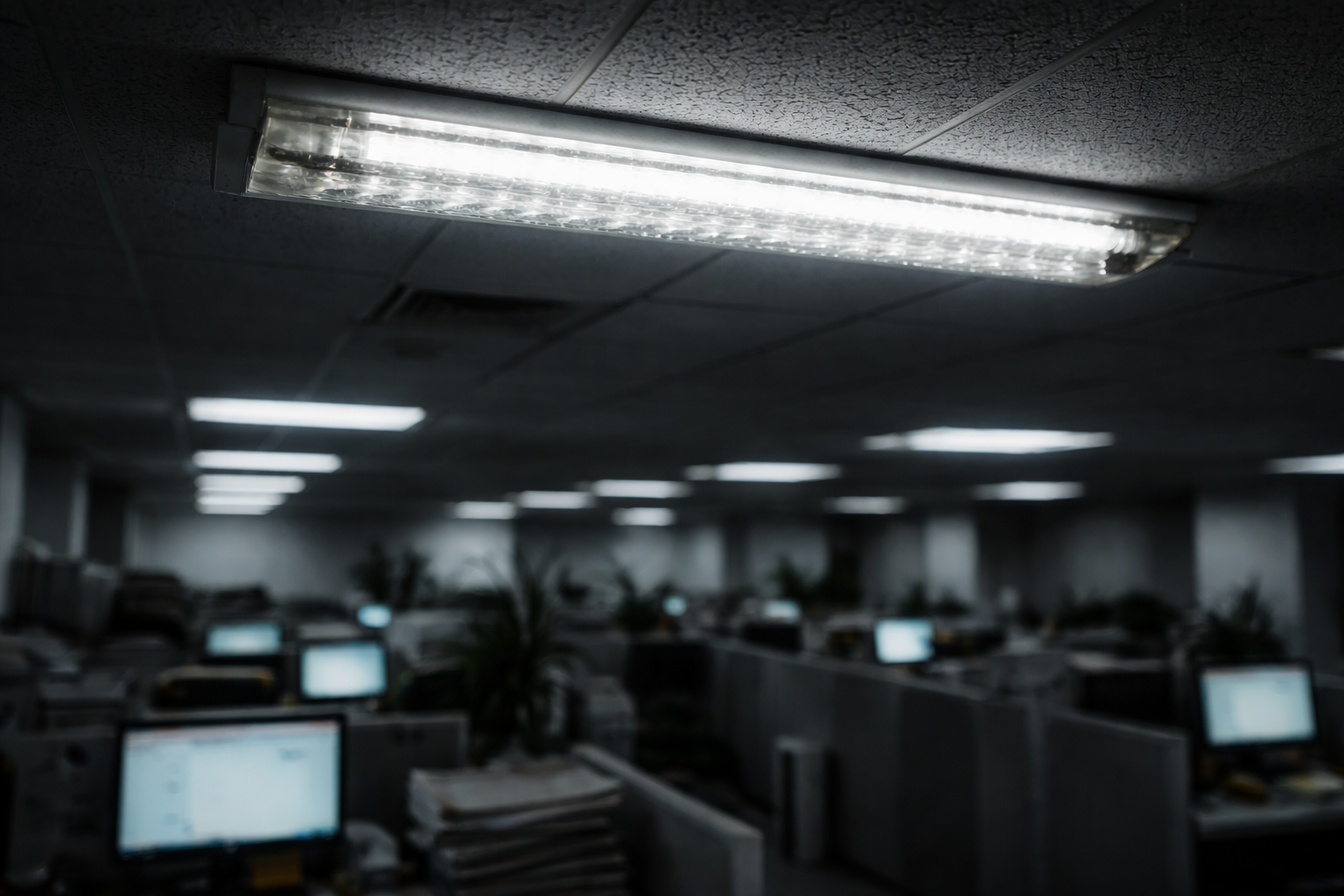
Sound is one of the most common contributors. Not necessarily loud sounds, but competing ones: multiple conversations layering over each other, the background hum that never quite goes away, and the sudden, unpredictable noise that fractures whatever focus was there. Visual input adds its own weight, harsh lighting, particularly fluorescent lights, crowded environments, and constant movement in the peripheral vision.
Touch sustains itself when it might not for someone else, including a collar in the wrong place, a seam, a temperature that’s slightly off, or unexpected physical contact that the body keeps registering long after the moment passes. Smell, in enclosed spaces, can be just as persistent.
And then there’s the load that nobody sees. Fatigue. Hunger. Dehydration. Emotional stress. And the particular cost of masking, the sustained effort of suppressing natural autistic responses to appear unruffled. Research links long-term masking to higher physiological stress levels; the body registers what the face is hiding. The more the system is already managing before a person walks into a room, the less capacity there is for anything that follows.
This is why overload can look, from the outside, like an overreaction to something small. Nothing obvious has changed. But the cup has been filling since morning. The last thing to happen is rarely the cause. It’s simply the thing that happens to be present when the threshold is finally crossed.
What it feels like from the inside
This part rarely gets written down. But it explains everything else. In the early stages, everything sharpens. Sounds push forward rather than staying in the background. It feels harder to be inside in the light. Small sensations that would normally settle start making themselves known instead. There’s a mounting sense of effort, like trying to tune into one frequency while every other channel insists on bleeding through.
Then the separation between things starts to dissolve. Instead of one voice being clear in a conversation, several arrive at equal volume. Instead of a room feeling like a single coherent environment, it fragments — sound, movement, and light all compete at once. The ability to think clearly narrows. Words feel close but not quite reachable. You know what you want to say; getting to it in time becomes the difficulty.
The body is involved too. Breathing shallows. The chest tightens. Muscles hold tension they haven’t been asked to hold. There’s a growing internal urgency; not quite panic, but a clear signal that something needs to stop. Many people describe it as running out of space: no space to think, no space to process, and no space to keep going as they were.
And with that, a pull towards the exit. Not to be antisocial. Not to make a point. Not to ruin anything. Simply to get the input down to a level that the system can actually manage.
If that doesn’t happen, if the person stays, pushes through, or feels that leaving would mean failure, the system will eventually respond regardless. And what follows a meltdown or a shutdown is not ordinary tiredness. It’s depletion. The nervous system has been operating well past its comfortable range. Coming back to baseline takes real time and real quiet, not just sleep.
The other side: when there isn’t enough
Everything so far has been about too much. But sensory processing differences work in both directions, sometimes in the same person, sometimes in the same hour.
Some autistic people experience the opposite problem: not an excess of input, but a deficit. The nervous system isn’t getting enough stimulation to feel regulated, and so it goes looking for what it needs. This might look like a constant pull towards movement. Difficulty settling. A kind of mental fog that doesn’t shift with effort. An attraction to loud sounds, bright colours, strong textures, or pressure — anything that brings the system online.
Staying still in a quiet environment isn’t calming for someone who experiences this. It’s draining. Movement provides the nervous system with the consistent feedback it needs to feel present and organised. The person fidgeting through a meeting isn’t being rude or distracted. They may think more clearly precisely because they’re moving.
When these behaviours are corrected or suppressed, which happens often, especially in classrooms and workplaces, the person loses the mechanism that was keeping them regulated. The result is exactly the kind of difficulty those corrections were trying to prevent.
And many autistic people experience both hypersensitivity and hyposensitivity, sometimes in different senses, sometimes in the same sense, depending on the day and the context. The experience isn’t fixed, which is part of what makes it genuinely confusing, even from the inside.
Why sensory overload gets misread
You can’t see a nervous system at capacity. You can only see behaviour. And behaviour — stripped of context — is easy to read wrong.
Someone is going quiet: rude, uninterested, or sulking. Someone leaving early: uncommitted, antisocial. Someone who can’t sit still: disruptive, seeking attention. Someone who tips into a meltdown: overreacting, out of control.
None of these interpretations is accurate. All of them are common. And every single one adds another layer of pressure on top of what the person is already carrying.
For autistic people, especially those who have spent years learning to suppress their natural responses to appear more “normal,” being misread in these moments isn’t just frustrating. It compounds the overload itself. The gap between what is visible and what is actually happening is real, and it matters. Understanding sensory processing is how we begin to close it.
What actually helps
Understanding is the starting point, but it’s not enough on its own.
For autistic people:
The most important shift, and the hardest to give yourself permission for, is acting early. Regulation works before the system tips, not after. Leaving a situation before you’ve reached your limit is not a weakness. It is, literally, the correct response.
Step outside, even briefly. Use noise-cancelling headphones. Dim or change the lighting where you can. Build breaks into long or high-stimulation days before you need them because by the time you need them, they’re already late. Create predictability where possible: knowing what to expect from an environment in advance significantly reduces the effort required to manage it once you’re inside it.
The basics carry more weight than most people acknowledge. Fatigue, hunger, and dehydration all lower the threshold before the day has even started. Clothing without unnecessary sensory irritants matters. Recovery time after high-input days is not indulgence; it is maintenance.
For those who experience under-stimulation: movement, fidget tools, music, controlled background noise, deep pressure, or whatever brings your system back online without tipping the other way. And where it is safe and possible, don’t suppress your stimming. The cost of suppression — sensory overload, exhaustion, autistic burnout — is higher than the discomfort of letting it happen.
For everyone else
You don’t need deep expertise. You need a basic willingness to interpret differently and not make things harder.
If someone needs to leave, let them leave, without commentary, without a look that suggests they’ve let you down, without making it a moment. Give processing time rather than expecting immediate responses. Simplify communication when someone seems overwhelmed rather than adding to the demand. Where you have any influence over the environment: lower the noise, offer a quieter option, and be thoughtful about strong scents. These cost very little. They can determine whether someone can be present at all.
And when in doubt, ask. “Do you need to step out?” is a far better response than a worried expression followed by silence. Quiet, practical support tends to land far better than making the moment larger than it already is.
A closing thought
For a long time — and in many places, still now — sensory differences have been understood entirely through the behaviour they produce. What people see gets measured against what is considered normal, and the gap becomes the problem to fix.
The shift from why are they reacting like that to what might this environment actually feel like for them seems small. But it changes everything about whether someone is supported, and whether they feel it.
Sensory overload can look like silence. It can look like someone who is just a bit off today. But underneath that is often a system working at full capacity, doing its best in a world that was not built with it in mind.
The more clearly we can see that, whether we’re autistic and finding the language for our own experience or non-autistic and learning to understand someone else’s, the more we replace judgment with something that actually helps. And that is where real support begins.
One Comment
Autistic burnout is not laziness or depression. What then is it? – Autism Thrive
[…] from the inside, it was something else entirely: total overload, a system stretched beyond its limits, asking for rest I didn’t yet have the words to […]